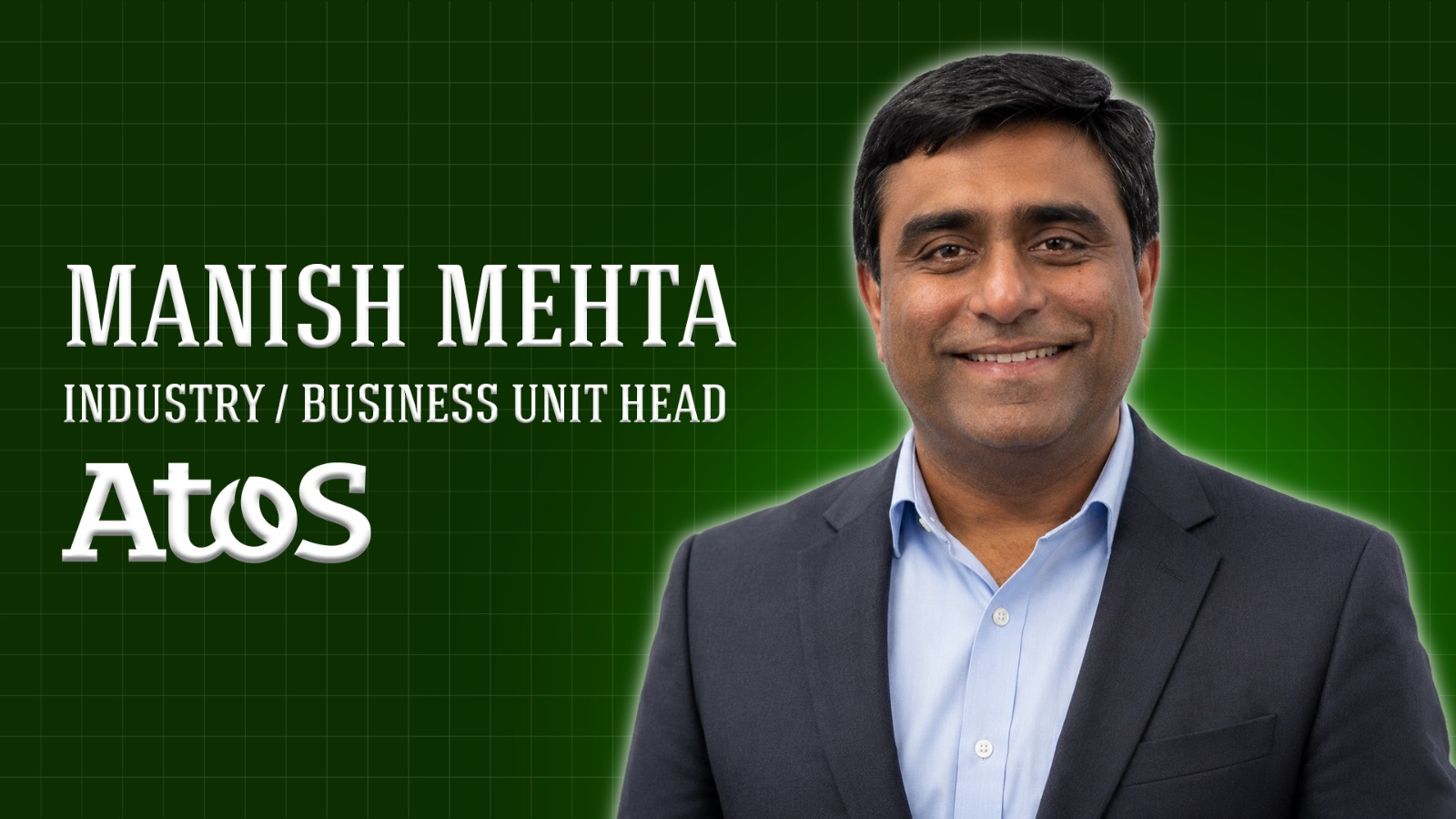
In this episode of Health Biz Talk, host Tony Trenkle speaks with Manish Mehta, who leads the health and life sciences practice for Atos in North America. Drawing on over 25 years of experience, Manish discusses how AI-powered platforms are transforming revenue cycle management for financially strained hospitals, the cost challenges of the token economy, and the importance of strong data and AI governance. The conversation also touches on lessons from comparing the US and UK healthcare systems, cybersecurity in pharma, and why interoperability remains the key to healthcare’s next chapter.
00:00 Intro
Welcome to Health Biz Talk, the industry’s leading podcast that brings you today’s top innovators and leading voices in healthcare technology, business and policy. And here’s your host, Tony Trenkle, former CMS, CIO and health IT industry leader.
00:00:12 Tony
Hi. I’m pleased to welcome you to another broadcast of the Health Biz Talk. I’m joined today by Manish Mehta. Manish is a senior healthcare and technology executive with more than 25 years experience helping payer provide and life sciences organisations modernise their technology operations and digital platforms. He currently leads the health and life sciences area for Atos in North America where he focuses on AI, cloud, automation and data led transformation, improve cost, quality, access and the patient member experience. Outside of work, Manish is a proud husband and father, an active community supporter and someone who’s passionate about using technology to make healthcare simpler, more human and more accessible. So Manish, welcome to the podcast.
00:01:11 Manish
Thank you for having me, Tony. So glad to be here.
00:01:13 Tony
Thanks. So we’re going to start off just by getting a little more background from you, kind of your major career decisions. How did you get to where you are today? What kind of stirred your passion for healthcare and the life sciences area?
00:01:30 Manish
Yeah, it’s a interesting storey, Tony. I normally say this, that generally I come from India and generally you get into it through a very rigorous education process. I’m an exception. My father is an accountant, so I studied finance and commerce, thinking I will be an accountant like him. But sometimes fate has a different plan for you. So my father got gifted an old computer by his friend and that sparked a journey that kind of led me to where I am today. So that old computer sparked a very different interest in my inclination.
I started opening up the computer, finding out what a hardware and a hard disc is and then I thought, you know what, how does IT even work? Got myself a book about computer programming and before I knew I was writing programmes for my father to help him with his accounting activity and that kind of spiralled towards an IT career. So it came out of my personal passion. I had no formal education into programming or it and since I was good at it, I was able to get my first job pretty fast and was able to excel throughout my career. So very interesting activity and I’m glad, right, one event can change life and this is one of them.
00:02:49 Tony
Yeah, yeah. It’s amazing how different turns in life bring into the different pathways, but you’ve certainly done a lot in this area and one of the things that I’m very excited about with this podcast is we can go in a lot of different directions with you. And so without further interruption, I’m going to start taking you through a couple of different paths that sometimes may seem a bit disparate, but I think they all kind of tie back to your vast and rich background. So the first area I want to talk about is revenue cycle management.
I noticed after this year’s hims you post on LinkedIn that you felt the revenue cycle was very ready for disruption in terms of, you know, redesigning workflows, changing current models. And I guess one of your jobs as a vendor is really helping healthcare organisations not only recognise the need, and as we know, many of them are kind of stuck in the patterns they’ve done for years. They, you know, they use x12 and they’re very much tied to, you know, existing cycles. So how have you managed to work with them to, you know, not only update their processes, but also how they can start bringing in AI and some other changes to help improve their efficiency and revenue collection?
00:04:10 Manish
Yeah, Tony, that’s such a relevant topic for this time. RCM or revenue cycle was becoming commodity or a boring topic a couple of years ago to the level where there’s such a saturated topic that not much you could do besides throwing in bodies and throwing in some automation work to improve the cycle. And lo and behold, we have the new administration and the policies and the cost pressure that healthcare has never seen before.
You have hospital systems looking at uninsured population crossing 20, 25 percentage, now reimbursements at all time low, putting some very, very unexpected pressure on operations. And RCM is getting this new renewed visibility to squeeze out every operational cost, but more importantly, maximising the revenue on the top line because RCM impacts both of them. So I think that was a trigger point for me and my group. We used to do RCM for many, many years.
We had acquired rtos, a company that did RCM pretty well and we still work. That group is part of my organisation and we work with it very well. But with AI at the helm, RCM has now completely taken a different form. Within rtos and my group, we are now looking at not a people based approach, but a platform based approach on how we can reduce denials. We can go back a couple of years and look at past data and trends and start recovering bad debts for our customers. And that kind of opens a very unique opportunity. Stony, we can, as system integrators, as vendors, we can now go and tell our hospital system customers who are struggling with finding cash that we can not Just save you cost but find you some revenue that you had probably written off and give you some extended budgets. Right.
And extended funding that you are not hoping to get. So that’s the new perspective and so far, Tony, that has worked well because customers, as I said, are looking for every single opportunity to not just reduce cost, but to maximise revenue. And looking at AI first platform based approach, which is now very much real, it’s no longer theory. We’re able to implement these solutions at our customers through our own services and also bringing in some partners who are leaders in this space.
00:06:39 Tony
So who is your target target audience? Is it small to medium sized hospitals or are you going after the larger health organisations? What’s your. Where do you think the organisations are that you feel you can provide the most value to?
00:06:54 Manish
I think the small and medium are the ones who will probably gain the most, Tony, because they are struggling right now to make ends meet. Right. The caregiver cost is going up and the patient cost, care cost is going up, but the operation costs are also up. So the small and medium hospitals are probably the best leverage opportunity for us and we are responding to that need to them. You’re also working with larger health systems, but larger health systems have some unique challenges that they’re trying to deal with. They already have some AI implemented multiple sources where they are able to do this, some in house, some throughout the services. But small and medium is very where we believe we can make the highest impact.
00:07:41 Tony
Have you focused at all on the rural hospitals? Because certainly they’ve been closing at a rapid rate and this administration I know has focused. They have their new transformation fund that they’ve focused. Have you done anything in that area?
00:07:59 Manish
Absolutely. Rural hospitals, a lot of physician groups and centres, they are all in the similar category. And again, when you are talking about rcm, it also is important to say that a lot of rural hospitals does not even have a good front end capability. So our RCM focuses on the front office where we go to a rural office and help them with, let’s say patient registration. A lot of errors can be avoided right at the front end and then the middle office in the back office can take care of the denials and the revenue collection and so on and so forth. So it’s a full stack offering, Tony. And the rural hospitals can benefit a lot more than given the infrastructure and the capability that we can provide them.
00:08:42 Tony
Right, right, yeah, I think that makes sense. The challenge I think is you start integrating AI in more and more and you’ve written about this is the whole area of what we call the token economy. And I know you’ve spoken about that. In fact, in researching for this interview, I saw that even as far back as 2023 you had written about this. So you’ve been seeing this going for a long time and now seems to be mainstream. And I think, you know, organisations have started to get used to some of this with cloud adoption because they’ve seen how they have to control their costs through, you know, how they use the cloud.
So this is kind of taking it to another level. But what are your thoughts in terms of as a. As if somebody’s a new customer who really wants to move towards utilising AI to help with their operations, how. What would you say to suggest for them to, you know, really look at it to protect themselves from like, cost spikes? I think I was reading one place where both CIOs are becoming more like CFOs and CFOs are becoming more like CIOs because both of their paths have to cross to build a better business model. When you begin using AI.
00:10:00 Manish
Yeah, absolutely. And this is a topic that we are discussing almost every week with global leaders right here at atos when we speak to our customers. So I think one thing is without any dispute or discussion, that the transformation that AI brings is real. And AI, although we are looking at AI as a revolution, it actually has been an evolution. The speed of change has now rapidly increase. So we have been doing AI for the past decade or more in healthcare. We have been doing machine learning and documentation processing to rapid edits.
And so AI has been in use with us for many, many years. But I think the pace of innovation has now significantly accelerated. But what this pace of innovation does, Tony, is it also brings a level of overhead that if you are not as a leader paying attention to it, can lead to some unexpected surprises. Right. For example, that is not discussed as it should be. It should not discuss enough is the whole concept of token economy AI.
A lot of leading AI frontier models provide very cheap tokens today, but there is no guarantee that the utilisation token will be. It’s just going to increase with every iteration you make and the token price may increase when the subsidies end. So paying attention to the new token economy will ensure that the CFO CIOs are able to keep tab of their budgets. And this is not something that has been discussed widely. It should be. And the second is the whole concept of interoperability. Right? Agentic AI requires a level of integration with legacy systems.
Today it is through something called as MCP servers and that that brings a level of tech debt and operational overhead. Right. If you don’t watch it carefully, you might be swimming into an MCP server farm which is hard to manage and orchestrate. So there are some practical IT challenges Tony. And the way we advise our customer is to bring in a solid governance use AI in a responsible way but also meaningful way so that it doesn’t become an overhead or a budget constraint as you go along.
So these are some of the aspects and then data is always the backbone of how an AI can effectively work. Healthcare is particularly more susceptible to having bad data because of so many systems not operating well. So bringing in the right level of context that the underlying data can provide. Right. Getting data from EPIC EMR and tying that with core administration on the payer side and cross selecting that with population health data bring in some unique insights, insight that AI can really help accelerate transformation and ultimately impact better patient outcomes.
00:13:03 Tony
Right? Yeah. One of the things that I know with the token economy that I saw we saw with the cloud is a lot of the adoption is being done by the business units as opposed to the central IT shops. So we started seeing a lot of cloud costs go up because a lot of business organisations were using IT as part of a, you know, changing their business processes. And I can see with AI this so called shadow IT is going to get even worse. I don’t know what you think for you it’s called good business but I mean.
00:13:40 Manish
You’re absolutely right so far. For an IT system integrator, yes. That will mean that even the business will engage a system integrator the way IT team does and IT team will probably not like it. But jokes apart, Tony, I think mature leaders have figured, have already acknowledged and started planning towards it.
00:14:02 Tony
Right.
00:14:02 Manish
So with the more we speak with our customers and more we help them, I think it’s a very clear recognition that setting up that initial governance and finops layer around AI will ensure that you’re not setting this up for unintended uses. Even business, when they, when they use AI, it has to be under that same governance tier to make sure that the business is leveraging it in a way that is a net productivity improvement and not a net cost improvement activity. Sometimes cost and productivity can get confused. So while AI can definitely help you reduce cost, they should be looking at it as a net productivity improvement. Cost should be able to support that productivity gain and guidance will help them solve all that. And we are leveraging partners also there are some new age Companies coming up that we are partnering with to put some, you know, ready made built solution to help customers navigate this.
00:15:04 Tony
Yeah, I totally agree with you. The key is governance and it’s getting all the different units of the organisation together to work strategically. Now a number of organisations have set up the Chief AI Officer. What do you think about that? And if you agree with that, where would you say it should be positioned in an organisation?
00:15:26 Manish
Yeah. So we are evangelising those roles. We recommend to set up a Chief Data and AI Officer. Both go together. In fact, we at rtos have our own Chief Data and AI Officer. In fact, Data and AI is a business line that we offer, so data and AI go together. So I think that role is important, that role, it’s not so much as to where that role sits, Tony, because a lot of organisations are now very agile and very flexible were a few years ago. But the empowerment that this role has to be different. For example, the Chief Data, any officer has to be the main custodian of the governance layer. They have to be the main organisation deciding which technology stack to leverage. The main organisation that creates the first few wave of use cases and make that as a virtuous cycle for the organisation to adopt and goon. So I think it’s the empowerment is what we normally evangelise. So it’s a combination of a Chief Data and AI as an officer.
00:16:35 Tony
Yeah, I’ve seen the evolution of that as well and actually I was chairing a work group and it was data and I said we need to change the AI and data because really they’re very integrated together and a lot of it is, you know, you have to tie the governance together because one drives the other really. And it’s no doubt that it seems like the right kind of evolution.
00:17:04 Manish
What the areas are rapidly evolving. Right. So while we are sitting here discussing data and AI six months down the line, right. The things may be different and they might be looking at a different stack altogether.
00:17:16 Tony
Right.
00:17:17 Manish
Centralised ownership allows them to be ahead and proactively evaluate and then implement before the shadow it takes over.
00:17:27 Tony
I think the good part about it is it moves organisations away from capital investments and it gives them more flexibility. So as the business and technology continue to evolve, it allows them to rapidly change how they do business. Whereas before, you know, they were tied to a lot of things that were keeping them more tethered than they really needed to be. I mean, not that they’ve totally moved in that direction, but they’ve made. Made a lot of progress.
00:17:55 Manish
Exactly.
00:17:57 Tony
So I’m going to switch to another topic again and that’s, you know, what you would call smarter digital health systems. And I think there’s a lot of players in this. We talk about different care settings, we talk about the role of the patient as they move across care settings, talk about the role of the provider, not only the clinical provider, but also the family providers as they move from say a hospital to assisted living to nursing care or move to home health care.
And I know you’ve looked at a lot of this over the years and it’s always been one of these areas that there’s standards issues, there’s technology adoption issues, there’s patient engagement and family engagement, there’s the, you know, the health care workers, especially home health, they’re not technically sophisticated. Many of them are, you know, low, low wage paid and they a lot of turnover. So when you look at that from your standpoint, how do you kind of look at ways to kind of tie it together? Because most patients, let’s face it, they’re in and out of different care settings, particularly as they get into the latter years, their life.
00:19:18 Manish
That’s right. And that’s a gap that we continue to see, Tony. According to me, the primary reason for that gap is that the care continuity is not necessarily done by the same system, Correct? That’s right. Get kind of handed over to multiple subsystems that may or may not be operating in a very cohesive way. And what that does is that leaves a lot of gaps in care, gaps in coordination. As you rightly said, the caregivers are incentivized separately so that directly impacts the way the care also gets imparted. And I think that is probably by design because the original intent was that having these specialised units take care of the different life cycle of a patient allows that unit to get better over time.
But the incentives started getting misaligned, right? And the gaps in care started emerging. So one, one thing that Tony, that we see here is that frontier healthcare organisations, right, when they look at a patient as a full life cycle and manage the care across these various phases in a coordinated way, I think the health outcomes are very better. Generally that is possible when a large hospital systems has a stake in each of these entities and they are able to manage the care, for example, the patient data moves through a single EMR itself can be a big improvement because we are not looking at fragmented system anymore. You are looking at the same patient having the same medical history, taking the same medication, looking at the past records and then ensuring that the care is getting Continued versus getting transferred from EMR to EMR and then looking at the patient very differently. So data is definitely one aspect of it.
And then ultimately the incentives that are aligned to each of those care units has to get better. And this is where I think government intervention may help to closing those gaps of care. So today, Tony, I see those gaps existing. Right. And it’s short term, it will continue to exist. But I think as more and more health systems integrate vertically, you know, the one thing that they will quickly start closing is the gaps in care because of data not being available as an example. Right. So through time it will get resolved and then ultimately having a government intervention and giving the same incentive. Right. Will actually be the long term solution to what you just described.
00:22:07 Tony
Yeah, I think the carrots and sticks do help in some cases. I think part of the challenge has been that the patients have not. Now patients have a lot of different portals and they have a lot of different ways to get information now they couldn’t get years ago. Their families also can engage more in ways. But a lot of it, at least to me, is as a patient now a lot of times it feels very fragmented still. And like you said, part of it’s the incentives are out of, are not as coordinated and aligned as they should be. But I think it’s also some of it is cultural. And I don’t know what you think, I mean, the way our systems have sprung up here in this country, I think it’s created and I know in a few minutes I’m going to talk to you about NHS so we can talk about, you know, difference there. But how much of that do you see is culture, how much is incentives and how much of it is just not having, you know, the right standards or technology in place?
00:23:14 Manish
I think the right standard in technology is the underlying thing, Tony. And incentives drive how much of that standard technology and tools that you can afford to consume or afford to use. And again, cultural point is, I think the underlying aspect that kind of oversees and governs this. But think about this for a minute. A large health system that has the potential and the power to drive the entire patient lifecycle through a standard emr, a standard decision support system, and then standard KPI to manage a health outcome will be far better equipped to treat the care and well being of a patient versus a fragmented handover type of situation. And the reason why a large health system can do that is because they can leverage technology backbone, they can leverage the same EMR in a patient portal and ultimately drive a KPI health Outcome KPI for a patient through the entire life cycle, right. So that visibility is there, the data is there to take intervention and preventive action when it, when the time comes. So I think that data and interoperability becomes that backbone which is actually missing today. A lot of life systems have started to do this, but they are still a long way in taking control of the full life cycle. They are still operating in their own zone, which is inpatient visits, not so much on taking care of home care and other aspects.
00:24:51 Tony
So I’m going to flip the questions because I think we’re sliding into the area. So it almost sounded like you were talking about government run healthcare, where you do have more of a, you know, standardised settings and more overall ability to manage patients across a variety of settings. Now, you’ve done a lot of work with the National Health Service in Britain and have seen other places overseas. Does it work better, do you think, to have it? And I’m not asking from a political standpoint because obviously there’s a lot of politics involved, but from a operational patient standard. And I’m not talking about, you know, shortages of personnel or rationing or anything like that, but just from your standpoint as a technologist and business person, what do you think?
00:25:46 Manish
Yeah, yeah, Tony, that’s correct. So I have worked on global healthcare. ATOZ does a lot of work with global healthcare. NHS in particular. Unfortunately, there’s not a straight answer. Right, because the more you understand the nuances, the more you will understand that each of these systems have some very, very unique advantages and some very, very unique challenges. Right? Those advantages bring with us for those operating environments. I think the US healthcare system is more market based, so it’s more. While the NHS and the global system is more population based, what that does is that the global healthcare environment, like nhs, they don’t have to necessarily work at, look at revenues, right? They have, they have a cost budget base and they have to make sure that the health is more equitably available to everybody, right? You have your gp, your GP makes a referral and then based on your clinical condition, your health care gets prioritised. So it sounds logical, but what it does is it brings in a level of bureaucracy, right, because you are looking at a huge population and you’re looking at a very GP centric way to manage a clinical condition and then decide you get care prioritise over somebody else.
00:27:18 Tony
Right? Right.
00:27:19 Manish
So that’s the plus. And the plus side is that your care is more equally available to everybody. The downside is that you don’t probably get the care when at the time that you think you need it. Right. You get the care when you’re gp, things you needed and the wait times are. You are very familiar with the wait time issues. The American healthcare system, right, Being more market focused gives you more choices. So as a human being, healthcare I believe should be a fundamental human right. As a human being you need to have choices and that those choices are offered here in North America, although you have to pay for those choices. Right. But one thing that I see that the market based healthcare promotes in the North American region is speed, but more importantly, innovation as well, because the market is free to do what they believe is right.
And then innovation drives a lot of downstream benefit to the patient health outcomes.So again, as I said, no straight answer. Both systems have their pros and cons. I think a blend maybe something that, you know, that each country’s, each of these systems can learn from each other. I think the global health systems, more health equity is something that the US can learn and then the choice and the speed and the innovation that we do here in the North American is something that the NHS and other areas can also learn properly. So what I would say, yeah, I.
00:28:55 Tony
Think it’s analogous to what I seen in this country with the telecommunications system. For many years we had the, the Bell system AT and T that pushed universal service and that was the push, it wasn’t cost and innovation. So there was a lot of lack of innovation that occurred. Then it split up and we had a great change in innovation and then it gradually became more of an oligopoly with, you know, three or four major players, but it’s still focused more on, on some innovation. If it had more players, I think it would do more.
But I think you’re right, I think that’s the difference is when you have a large government run enterprise without the market incentives, it doesn’t promote innovation. But on the other hand, it distributes, you know, services more equitably throughout the country. So our challenge is how do we get more equitable services in the us? Because our, you know, our, our indicators from a health standpoint are not good. But on the other hand we have very innovative healthcare organisations that provide, you know, the finest health care in the world, frankly, so prices, right.
00:30:08 Manish
You have so many choices, able to afford it, you have so many choices.
00:30:12 Tony
Right, right. So yeah, so it’s, it’s, it’s an interesting thing. So I’m sure it’s, it’s fascinating for you to just kind of look at the different systems and how they kind of play out and how you as a, a vendor can pivot to the different markets.
00:30:28 Manish
That’s right.
00:30:31 Tony
So we’re going to turn to another area that’s of interest and, and that’s cyber security. I know you’ve done a lot in, in cyber over the years and, and the interesting to me is what you’ve been doing in pharma because pharma has its kind of own unique challenges. You’ve got a lot of data sensitivity with the clinical trials, with the reg filings, with all the research that’s done. You have, you know, you got cross border work that gets done quite a bit. You’ve got a lot of different players in the mix because it’s, you know, a lot of third party players in this.
So it presents to me really unique and of course the whole supply chain discussion is tied in with that as well. So it’s very unique. I mean it’s something that to me is fascinating but challenging. And I know a few years back we were looking at potential for blockchain to help in that area. I don’t know if that’s still something that has that move down to the wayside or it’s got that, you know, just gotten swept up in the, in the crypto and it’s not being looked at as much for, you know, things like supply chain management. But at the time, you know, it looked like there was some possibilities there. And of course you’ve got AI and, and some of the other technologies as well. So what, what are you looking at when you see it? How do you deal with it? And do you, do you work as kind of an integrator for this or do you tend to focus on like specific areas?
00:32:05 Manish
Yeah, yeah. So our, our business that I manage health and life sciences focuses on, on those aspects, Tony. So taking a molecule to the market is a, is a very, very long, lengthy, lengthy process, right? Pharmaceutical manufacturers, device manufacturers, right. They, they have so many obstacles for the right reasons, right? They’re all compliance. Most of the obstacles are compliance related because you, you want to make sure that it is tightly regulated and it moves through a very religion compliant process before a drug can be entered into the market or a medical device is entered into hospital system.
So a couple of things that you mentioned, Tony. Let me address those. I think pharmaceutical industry has been a little more advanced in using technology compared to let’s say a hospital system because for them speed is important, compliance testing is other aspect that is more important so that they leverage technology A little more eloquently than other segments. But what happens is that when you are looking at drug manufacturing and I would bring in the concept of sovereignty also, which is very important, it centric, you don’t want data leakage to happen.
It presents those two aspects, the security angle and the sovereignty angle. So one thing that we help some of the global pharma companies do is provide them a more sovereign high performance computing environment. So we have our own high performance computing environment which is secured where these companies can do their research at scale. Right. Giving them the unique advantage of not putting everything to the cloud for say cloud is also secure but they feel comfortable sometimes doing it on parameter in a high performance computing environment.
So that is something very unique thing that my group does as health and life sciences. But also more important is that helping customers stay compliant from a documentation stand, from their filing standpoint and giving a security layer where they could do this effectively. People can do this effectively on a platform like let’s say Microsoft Office 365 is also something that we do extremely well. Making sure that the clinical trial people and the folks are focused on that activity and not have to worry about securing the environment while we take care of all of those aspects is something that improves their productivity end of the day. So that’s a very unique aspect.
And you spoke about blockchain Tony as well. So yeah, we don’t hear more about blockchain in commercial development. People still do use blockchain and supply chain crypto as you rightly said, but it’s not found a place into day to day commercial and support activity. It’s still one of many tools people can pick if they need to. But I think folks probably have market has moved on to other things and not focusing too much on it.
00:35:19 Tony
Yeah, that was always my thought about it when I was at IBM. They were promoting it for a while, but it just seemed to me like implementation wise it was challenging. And now I think like you said, I think the technology has kind of passed it by and there’s other ways to achieve similar type of results without tying up a lot of resources and other things you have to do with blockchain. Okay, well I think that’s a critical area that’s going to continue to get more and more focus as time goes on. Because I don’t see, you know, as we move into more designer drugs and you know, different types of work in that area, it’s just going to continue to be an area with a lot of challenges and potential security disruptions.
00:36:14 Manish
You Actually raised a good point. Right. Precision medicine and the whole segment of specialty drugs. Right, Exactly. It’s such an expensive area that a lot of pharmacy companies invest their money and the consumers are only limited. Right. So having that whole supply chain aspect figured out and in a secure way on a platform. Right. That they don’t have to worry about administrative issues, I think that is where the trick lies. And we help our customers do all of that.
00:36:52 Tony
Yep. I’m sure there’s a lot. Well, I could even talk, we could even talk about revenue cycle management for the pharmaceutical industry because I think that’s becoming more and more of a challenge for them as well.
00:37:04 Manish
Yep. And the rebates, right, The PBM rebates and all that.
00:37:07 Tony
Exactly, yeah.
00:37:08 Manish
Yep.
00:37:10 Tony
All right, well we’ve had a great discussion, Manesh. I think now I’m just going to turn to a couple final question. One is always ask our guests about the personal side. What keeps you busy when you are talking about health care? Well, not just policy but business and technology. I know you get involved in a lot of charitable and you’ve got a charitable efforts and you’ve got a family and everything. So what’s your, what do you do on your two hours of spare time a week?
00:37:40 Manish
Tony, you know I’m a very boring guy, right. So while I do spend a lot of time looking at new and cool stuff, I’m a hands on person so I like to do stuff. But when I am not doing all of those very simple life. I have two daughters, spend time with my, with my family. We love taking walks with our dog and then support the community wherever, wherever we can.
00:38:03 Tony
Right.
00:38:04 Manish
So whatever time I can find, I try to help the community. But other than that very, very simple, boring lifestyle.
00:38:12 Tony
Great. Well, I think we’ve covered a lot of topics so I always also ask where do you get your information from? Are there things that you would recommend in terms of if somebody wants to find out more about what’s going on in revenue cycle management? Of course they could ask AI to tell them all about it. But outside of asking that, where do you suggest they go for further information on the variety of topics we hit today?
00:38:45 Manish
Yeah, many, many places. Tony, I follow you as well. So you’re also one of my sources. The Drug channel, Wall Street Journal. There are many, many good places. But off late, Tony, I have really come to appreciate Google Notebook LLM. I know you talk about AI, but Notebook LLM, what it does for me at least is it helps me curate knowledge in a much refined way. So it Taps into all the good sources and then creates very small consumable information that I could quickly relate to either on my phone or when I’m flying. For example, you can create nice infographics or short presentation, but I personally have found tremendous use of Notebook LLM.
00:39:31 Tony
Okay, I’m going to have to look into that one. I haven’t tried it. I’ve used some different types of AI for putting together presentations and stuff and it’s been really helpful even if it doesn’t give you exactly what you want. To me, it’s like a nice aid that gives you, it gets you thinking in some different ways. So. Right. And then I guess to wrap it up, you’ve been in healthcare for a number of years now and what has been the biggest disappointment to you in healthcare in the last 10 years or longer? What, what would you have liked to have seen happen that didn’t happen?
00:40:13 Manish
Yeah, it’s an irony, Tony, and this might be contradicting everything that so far I have said about my knowledge on healthcare, but I don’t fully understand my own healthcare bill. Oh, really?
00:40:28 Tony
That’s not good.
00:40:30 Manish
So the transparency and the cost of healthcare is unreasonable at this point of time. And the like every other industry, the cost curve has to go down. In this case, the cost of health is not going down. So I think that’s probably my disappointment that with all these innovation, with all the aspects, the cost of healthcare is going up. So where is that button or the lever that will help bring the cost of care down is still a challenge.
00:41:07 Tony
Yeah, I would agree with you there. There’s a lot of challenges with that and a lot of it gets into how much health care are we willing to pay for as we get more and more into precision medicine and how do we make tough choices. And as a country we’ve had so much wealth that we haven’t had to make those choices or the choices we’ve made have advantaged some people as opposed to others. So it’s, it’s, it is hard to, to see where we’re going with this because as the costs keep going up, I mean, over 18% of our GDP and you know, depleted trust funds for Medicare, cost challenges in Medicaid and certainly, you know, we talked about rural health and some of the challenges there. So, so, so while we’re focusing on that, what, what is the thing that’s made you happiest about healthcare changes in the last 10 years? What’s been something that gives us all cause for hope as we move forward in the next coming years.
00:42:11 Manish
Yeah. So thing that obviously still makes me very optimistic about is the concept of interoperability, Tony. I think last three or four years, interoperability is becoming mainstream now. So the concept makes me happy. I’m yet to see the benefits because of the interoperability. So I’m hoping next time we speak, I will have some more evidence to share that. Yeah, I’ve seen the benefit here because of this, but I think we’re going on the right track. Having interoperable systems and data allows the next generation of optimization to take place and transparency to come in. So I think that’s probably very encouraging to see in the industry.
00:42:57 Tony
I think. Yeah, I think it was Bill Gates or someone says we all overestimate the impact of technology in the short run and underestimate in the long run. And I think that’s probably what we’re going to see here in healthcare. We’ve kind of overestimated some of the changes we’ve made, but they’re setting the platform for future evolutions that’ll come in the next five to 10 years.
00:43:21 Manish
Exactly. It has to. I mean, there’s no other way as the costs are going to cross beyond reasonable limits. Right?
00:43:27 Tony
Exactly. All right, Manish, well, thank you very much. Been a great conversation and look forward to talking to you more in the future as things continue to evolve in the space.
00:43:38 Manish
Thank you so much, Tony, for having me. Great conversation.
00:43:41 Tony
Thanks.