

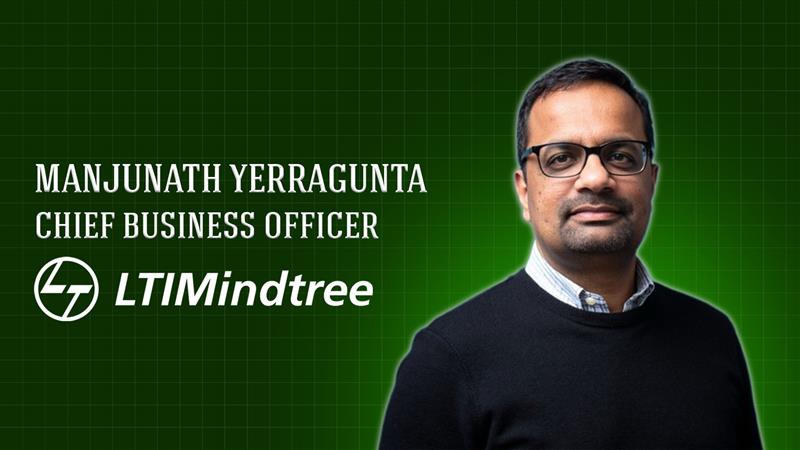
In this engaging episode of HealthBizTalk, host Tony Trenkle, former CMS CIO, sits down with Manjunath Yerragunta, a seasoned healthcare technology leader with over 20 years of experience across payers, PBMs, providers, and global consulting firms. Now leading the healthcare business at LTIMindtree, Manjunath shares a deep, practical look into the technologies shaping the next decade of healthcare.
Transcript of the Podcast
00:00:00 Intro
Welcome to Health Biz Talk, the industry’s leading podcast that brings you today’s top innovators and leading voices in healthcare technology, business and policy. And here’s your host, Tony Trenkle, former CMS CIO and health IT industry leader.
00:00:16 Tony
Hi. This is Tony Trenkle and I want to introduce our guest today, It’s Manjunath Yerragunta. Manju, He has over 20 years experience in the healthcare industry working with payers, PBMs and providers across different market segments. He currently leads the healthcare business at LTIMindtree where he’s responsible for strategy, innovation and growth of the business unit. Prior to this, he held business leadership roles at Cognizant and Infosys. He also had an entrepreneurial stint at Indegene where he set up the healthcare business, helping payers and providers improve quality of care and drive revenue growth with data and insights driven solutions. So Manju, thank you for joining us today. And we start off by just asking a little bit more about your background and how you got to where you are today. So if you could just kind of give us a little bit more than the sketch I just gave you a minute ago. What were the kind of things that kind of motivated you to get into where you’re at today and the types of work you’re doing?
00:01:26 Manjunath
Sure. Thank you Tony. Thanks for having me on your podcast. It’s always a pleasure talking to you. Yeah, for my background, you know, I, I grew up in India, you know, and you know, most of my education happened in India. I am an electronics engineer by training. But you know, during the college days I took a strong interest to programming, software engineering and that landed me in the IT services industry which was booming back then. In the 90s, late 90s and early 2000s we did some work initially working with US retail and banking insurance customers to start with. But that was a time when.
The IT services industry had just started realising the importance of verticalization of services in order to build industry specific capabilities and solutions within our businesses. So the company that I was working for at that time, which was Infosys, I at that time was running this large initiative for the PBM business of Walgreens. They had a PBM business which got later acquired and finally landed in OptumRX. But I used to be working for that original, you know, PBM business of Walgreens re platforming their, you know, entire PBM core system. And as I was doing that, I think I got an opportunity to work with some of the business leaders directly. You know, until then it was all about technology and, you know, distributed objects and, you know, stuff like that. But, you know, that gave me exposure directly into, you know, to the business world of it. And I can’t tell you how many aha moments I had, you know, when, you know, when I started working on those, you know, different business solutions with the business leaders.
And I think that that kind of, you know, I think triggered a, an everlasting. You know, liking or I got hooked up to, you know, healthcare, you know, from there. And after that I had some opportunities to, you know, move around and be part of other vertical industries. But I think, you know, this whole attachment I built with healthcare I think led me to and ignore those and just continue with the industry. I love that. So, yeah, you know, it’s been, you know, couple decades, a little more than a couple decades in healthcare and.
But I think over the two decades my interests and roles have evolved, you know, with the opportunity to work closely with the IT business leaders very early on, you know, as part of my career led me to develop an interest in driving strategy solutions which naturally led me to business leadership roles. But I’ve been in P and L growth and strategy roles for most of my career now. And in my current role, you know, I had the healthcare business at LTIMindtree, which, you know, I believe is the nimblest AI first global service, you know, systems integrator. My responsibilities include bringing the best of the company to our customers and also drive market strategy and growth.
00:04:44 Tony
Great. Yeah. I looked at your background. It’s quite impressive. You’ve done a lot of work in a number of different companies, many of which I’m familiar with over the. For working with them over the years. So I first got acquainted with you through Onyx and the area that we were talking about and where I want to turn to next is interoperability. And I know you’ve had a lot of experience looking at the whole area of interoperability. And I guess, you know, over the last number of years the what classifies as interoperability maybe has changed a bit as the industry has gotten more and more intertwined. So I, I want to kind of start off by asking you what is your kind of definition of interoperability today and how would that compare with you talking about interoperability, say five, ten years ago?
00:05:42 Manjunath
Sure, I know, I think absolutely you’re right about the definition of interoperability changing, especially in the last five to 10 years. And what used to be situation seen as interoperability 10 years ago is a lot different today. If I Have to. Give a definition of interoperability. In today’s context itself, that would be. It’s the ability of all the information systems, the devices, the applications, all of these to be able to access, exchange data, integrate them and also cooperatively use this data. We have to meaningfully use this data at the end of it. So I think it’s the ability to do all of these things across these multiple channels, if you will. Also, more importantly, this is across the organisational, regional and national boundaries. I mean, we want to now work across these.
It’s not just interoperability is not just working within a healthcare organisation, it’s obviously the ability to connect to the external world. I hope I didn’t make it sound a little too academic, but essentially what I’m saying is. It is no longer just a technical connectivity of two systems. It is a lot more than that. It is about ensuring that data can flow securely, efficiently, meaningfully and ultimately drive the health outcome. So that’s how I would define interoperability.
00:07:19 Tony
Yeah, I guess if I’m, I’m looking at this as a patient. To me, interoperability is not here. Although I can get into multiple portals and communicate with my provider, get lab results and other information a lot quicker than I could before. In fact, couldn’t even get it, you know, for years ago. It still seems like a lot of the healthcare is tied up with the different health systems or even the different kind of EHR people use. I know there’s been some work in that area over the past few years to promote it. You know, that’s, you know, doing away, trying to do away with information blocking things of that sort.
But seems to me as, as a user of the healthcare system, it doesn’t seem like it’s gotten there yet. What, what do you think about that? What do you see as the kind of the challenges today? Do you see this more cultural than technical or a little bit of both? Or do you feel like from a business standpoint, a lot of these organisations are looking for business advantage and for them to improve interoperability may not be quite what they’re, you know, something that helps them from the bottom line, at least from their perspective. What do you think are the challenges, say, with interoperability?
00:08:45 Manjunath
Yeah, no, I think I, I 100 agree with you that we, I mean, I, I think, first of all, let me take a step back and first state that the adoption has been very encouraging. I mean, compared to what you support what we saw before, you know, what happened in the last five years is definitely increasing Compared to what, what was there before. But again, you know, you’re, you’re absolutely right in saying that, you know, it’s still not there yet and there are challenges, there are multiple challenges and I think it’s a combination of all the things that you talked about. I mean it’s not just technical, not just financial, not just cultural.
But I think all of these have contributed to that if I had to, from our experience here at LTIMindtree, working with the healthcare customers. Trying to adopt interoperability, adopt standards, the challenges that come to mind, top of mind is list is starts with there’s a lack of data standards. I’m sure all of us agree that there’s so many multitude of formats in the healthcare industry of how data is stored and utilised within organisations. So problem number one, I mean we have to, we could build a solid technology solution on top, but if you don’t have the data in the right format, it’s only going to be so much successful. Second, I would probably call out is without naming names, there are all these EHR platform vendors. They have their own proprietary architectures, proprietary data structures and then to complicate it even further they have vendor lock ins.
It’s not easy to access data in many cases we’ll have to work through those challenges as well then I already talked about data but if you look at when data is available, we oftentimes see that there is a data quality issue. That’s another big challenge to work with. And then of course the other things like the privacy and security compliance, all those concerns are definitely there. And lastly, I would say financial constraint is not a smaller problem either. We see several times these initiatives getting blocked at a time when they look at budgets and the cost that you need to run these initiatives. So that contributes to that as well. So yeah, like I said, it’s a combination of these different constraints and challenges. But like I said, I think we have made some good progress, I think in the last five years and hopefully we’ll get to a better state soon.
00:11:37 Tony
So how do you define progress? What is considered progress in your. Is it more the fact that they can complete transactions where they couldn’t complete transactions before or is the fact that more of the stakeholders are able to communicate and send information and receive information from a variety of sources or, or something else?
00:12:04 Manjunath
No, I think it is, it is more of the second one. I think it is the ability to get the data and then communicate out to, you know, the different, different groups.
00:12:13 Tony
And what about FIRE? I mean FIRE has been talked about as the panacea for a lot of things. What, what do you think in terms of FHIR? Has it lived up to its potential? Where do you see it going in the next few years? Certainly it had a lot of hype a few years ago and there’s been some progress and of course we’ve had some mandates from CMS that have helped push it as well. But what do you think? Is FIRE nearing mainstream adoption at this point? Do you think we’re still a few years off?
00:12:48 Manjunath
No, that’s. That’s a great question. I think, you know, FHIR is. Very important. I think, you know, both from LTIMindtree’s vision for interoperability and I think for the broader healthcare industry as well. And I feel, you know, FHIR is to healthcare. You know, what TCP IP was for Internet. I mean, it’s here to solve all the problems we’ve been facing for long time. And still talking about interoperability, I think I do see in many senses FHIR being that, in a way a silver bullet to address all these multiple challenges.
00:13:28 Tony
Right.
00:13:28 Manjunath
And I think FHIR is. I feel it’s here to stay, it is here to solve the problems because of multiple reasons. Number one, FHIR has always been built with the modern digital landscape in mind. Web technology, APIs and easy to integrate, easy to understand. And then if you look at the structural part of, probably has the best definitions of structures and meanings, which I think has led to a lot of consistency, a lot of standardisation as the implementations happen, very modular in design, which is why it’s easy to implement. So overall, I think, you know, the FHIR itself, you know, first, as a very collaborative ecosystem that we’ve always been wanting to see within the healthcare system, it breaks down silos and ultimately allows us to get to that seamless integration goal that we’ve been having. Now, you know, again, these are good reasons for us to adopt and I know that there has been a good progress in the last five years.
Like I said, if you look at the data, I know a large percentage of hospital systems have adopted FHIR standards and a lot of EHR platforms have API based FHIR, so we see a good progress in FHIR adoption. I think the mandates have definitely helped get this rate of adoption, but I feel just to wrap it up there, while there is progress, while it’s encouraging, if you take a step back and look at the entire healthcare industry, you’ll see that the adoption is not consistent. I mean, you look at the larger integrated health systems and the technology forward, companies have been adopting it while the smaller ones, the providers, is where we see there are barriers, legacy systems and the cost constraints. These are kind of, you know, slowing that down at that end. But, but again, I’m optimistic, you know, with all the benefits that FIRE can bring, you know, it’s, it’s going to be adopted more, you know, we want to see more of it in, you know, within the healthcare system.
00:15:51 Tony
You know, one of the things that Mark Scrimshire has talked about is the fact with the new prior auth regulation, he feels that’s going to really bring FIRE into the more of the mainstream business processes and move it away from just being a mandate to something that’s a, you know, a business. Multiplier, a business improvement process, something that really begins to change how these organisations communicate and, and work with various flows. Is that something you agree with as well?
00:16:30 Manjunath
No, 100%. I think. Like I said earlier, interoperability today, especially with FHIR. Available to us. The benefit of interoperability is not just connectivity, not just the compliance to mandate. And that is what we are seeing with our customers when we start articulating about, hey, by the way, you cheque the box of compliance, but did you know you could impact all these patient outcomes by leveraging all this great stuff. Within interoperability, within using fhir. And I think that opens up. Everybody sits up and then we are actually talking innovation and using this for broader, bigger initiatives impacting the outcomes. So yes, absolutely, that’s exactly what we’re seeing as well.
00:17:24 Tony
Great. So we’re going to change to a different topic. We’re going to talk a little bit about AI. Of course, every podcast about healthcare or anything else nowadays has to touch on AI. But you wrote an article a few months ago from a publication where you talked about AI and its potential for improving patient care. And I thought it was very well done and I wanted to see if you could spend a couple minutes just talking about the insights that you discussed in the article and also anything else that you’ve thought about since the article was published, what, about eight months ago now?
00:18:04 Manjunath
Sure. I think since you, since you mentioned about every healthcare discussion having AI in it, and you’re right, I mean that’s what I think we are seeing everywhere. I think it’s across industries. Just a quick funny thing that happened last week and I was at an advisor conference, you know, 40, 45, 50, you know, C level executives from multiple industries, including healthcare. So I was sitting next to the cio, you know, as part of the sessions, and we had five sessions, four of them had the name AI in their titles. Right? In the, in the session titles. And, you know, so we went to the four and the CIO looks at me and says, I think the next thing is going to be interesting because there’s no AI in the title. And, and as the session starts, the fifth session, the moderator starts off by.
It was a talent management kind of a topic and they’re like, oh, we need to be prepared for the new AI world and how can we prepare for, you know, talent in the new world? So on. Right. So, yeah, it’s funny, you know, you’re right. I mean, we have, we cannot probably have a conversation without, you know, talking about AI. But, but again. I think you asked a very, very important question and it’s, it’s an area of great personal interest to me as well. You know, yeah, I, I wrote something eight months ago, but I think a lot has happened after that. We, we continue to monitor it, we continue to build solutions, we continue to analyse and also in the patient care space as an impact of AI.
But. I think what I want to say is that first and foremost, the impact AI is having on the broader health care space and specifically in the patient care space is no longer. It’s no more set of theories or ideas. It’s happening here and it is having an impact and we are seeing it firsthand. So if I have to look at areas that are, that are most benefiting, that are showing promising results, I mean, there’s, you know, ultimately I believe the impact is going to be across the, you know, the patient care space, you know, every area within patient care. But the ones that are already showing some very promising results are, if I had to put it between administrative and the clinical side.
On the administrative side, you know, the areas that are showing a lot of promising results already are the other routine tasks, the scheduling, documentation, prior and claims processing. Anything that is more routine, I think they are. And we ourselves are involved in a lot of these initiatives, helping our customers infuse AI into these processes and start seeing results. And while these may look as seem to be administrative at the top level, you know, ultimately though, if you look at the impacts they’re having, you know, they are. They’re helping, you know, obviously optimise your costs and improving your operation speed. But ultimately it’s also having impacts like, you know, it’s freeing up the clinician to focus more on patient care. So ultimately, I think, you know, these are having that necessary required impact as well. Now, more exciting, you know, storeys on the on the clinical side, I think the areas that we see a lot of activity happening and a lot of good results coming up are ideas like diagnostics. A lot of early detection, accurate detection with decision making abilities is becoming a reality.
And this is not just looking at the traditional medical images and lab results and encounter data, but know it’s going into what was impossible in the past. Looking at things like, you know, multi omics based analysis, you know, genomics, proteomics and lipidomics. You know, I can pronounce all of this in a single sentence but you know, yes, looking at everything and, and making that a reality for us. You know, early detection and decision making, part remote monitoring, telehealth used to be there, but I think what has happened now with, with AI is, you know, we have the ability to do more continuous monitoring, we are able to do more, you know, virtual consultations and you know, so everything is becoming possible there. Personal medicine is, is another area where again I’m very personally, you know, interested in that space.
But a lot of these early diagnostics and, you know, all the possibilities are leading organisations to look at true personal medicine. I know we’ve been talking about it for a long time, but I think it’s definitely happening. So yeah, those I feel are good areas of promise. Challenges are there. Again, like any other new technology, we are obviously seeing challenges across the board. We have the usual data privacy, security, buyers equity regulations and all kind of such broader challenges which I think we continue to address. But I think I just want to touch upon the, maybe the more foundational level challenges that I think are probably more important, which most organisations are probably not thinking about. And they hit these challenges at the last step of.
Their flagging off the initiative, if you will. Things like availability of data. We already talked about data being a problem, availability of quality data being an issue within the healthcare space. So that definitely plays a role. The underlying infrastructure is a, is a second piece where. You know, I think organisations tend to underestimate, you know, what is required to run these, you know, new AI solutions and integrating with the clinical workflows. I mean you could have these silo AI solutions but how do you integrate them into clinical workflows? With all the proprietary systems we talked about, I think that’s another big challenge as well. Lastly, which I think is the elephant in the room. Everybody has this challenge but I think we quietly deal with it is a change management. I think most organisations hit a absolute roadblock when they start seeing there is no acceptance, there is no consistency in understanding and Goals and all that stuff. So I think change management becomes another challenge that we would like to see more addressed if you want to make progress on some of these bigger AI solutions.
00:25:01 Tony
Yeah, I think that’s right. And you and I have seen this happen with technologies forever. I mean, whenever you infuse existing processes and ways of doing business with new technologies, it always requires some new thinking because there’s a tendency to just take what you’ve had and, and put something and add it on to it rather than stepping back and saying, okay, now that we have this new capability, what can we do and how can we do things differently? So that kind of leads to our next question. You’ve spent most of your career working in applications and infrastructure management and operations and of course there’s a lot of changes that have occurred from a technology standpoint in recent years. Not just the AI, but certainly changes in, with, you know, certainly cloud computing, the use of APIs. Additional sources and uses of data. I mean, there’s a lot of different ways that are much different than they were even five years ago. So how are you kind of changing your business strategies to take most advantage of the, the new technologies today as you, rather than the way you would have looked at things a few years ago?
00:26:23 Manjunath
Yeah, no, I think I, I, I, I totally agree with that. Right. You know, yeah. What was application infrastructure management or the business operations? You know, when, you know, you look at 15, 20 years ago, what versus now, there is a sea of a change. I mean, it’s completely transformed, if you will. And you’re right though, technologies and solutions like cloud and AI automation, APIs, microservices and all these have driven a lot of change in the way things happen, in the way we support our client organisations with solutions like this.
So if you look at maybe some of these different technologies, cloud has certainly had a very, very significant impact in the way these organisations view or consume IT services and the way we provide services in support as well. Number one, I think cloud has made it a reality for the organisations to be able to reduce their upfront cost. I mean, you don’t need to invest in a lot of hardware, a lot of infrastructure before you start doing things. So I think that dynamic capability to consume as your business grows and the seasonal demands and all of that. So I think we obviously are helping that part with, you know, with the cloud options being available now, while there are, you know, these cost and efficiency gains, we’re also using.
The cloud platform capabilities to also drive, accelerate innovation with our customers. You know, what used to take a long time in the past, you know, to develop and test and experiment and then make a decision is now happening in a much shorter time. We are able to develop new applications, do the quick integration with some great analytics and use AI to drive some insights and you have the next decision making capability of what you want to do with that. I think that is one big strategic change I see with the way we are working in this space with cloud being there now with AI and automation. I mean there is this obvious benefit of improving the basic efficiencies, operational efficiencies.
But also we have, at LTIMindtree, we have developed models like what we call as a unified service delivery models, which brings your infrastructure, your applications and business operations support into a single support model, if you will. And I think, and that is being possible because we are able to use AI to improve efficiencies, cut down lag times, all that good stuff. And I can give you an example of a client that added about, I don’t know, maybe about 10, 15%. Additional clinic locations. Across the country and their infrastructure support cost went down by 25% because this unified model that we brought, so you’re doing more, you’re spending less. So that is being possible, business is happy about it. So yeah, those are being made possible with AI and automation.
Now with API microservices, we are seeing a significant reduction in our customers unscheduled downtime. Again, another client example, I can quote, where their unscheduled downtimes went down by 40% over a year and the business is happy, they don’t need to go through these cycles of downtime and so on. So some of these are, I think some of the strategic outcomes benefits of all the technologies we just talked about. Outreach is another example. Look at marketing. Teams are now using AI to basically do tailor their outreach and education and programmes, programmes and all that. So I think that is ultimately pushing or driving a better patient satisfaction, member satisfaction, which ultimately results in better retention, growth, new members coming in. So yeah, we are having an impact on those outcomes as well on the growth and retention part of it.
00:31:14 Manjunath
I can, you know, go on and on about it, but. But I think in summary, you know, these capabilities I feel are more than just technological upgrades. You know, we are helping using these to help our clients use it as a catalyst for, you know, business transformation, you know, help your growth, help your retention, help your, you know, operational efficiencies, member satisfaction and all that stuff. So yeah, it’s exciting transformation.
00:31:39 Tony
Yeah, I think you’re right. There’s a lot of things you can do that you couldn’t do a few years ago when I, I turned to the, the, I guess for one of a better way of looking at the customer side. That’s when I see there’s some challenges. I know, at least from my experience of, of working in the government and running a large IT organisation, you don’t get people who are up to speed with the latest technologies. A lot of them have worked in the same types of jobs for many years and it’s difficult for them to keep up with the technology and how it evolves and most importantly how it can be used to change how they do business. So how have you managed to work with some of these? My concern sometimes is with, I know with the government, sometimes what we do is we’d outsource the thinking to a contractor who would then work with another contractor to, to come up with a solution. But that might not be for the best interests of the government or the people that the government serves.
And I’m just talking about the government here, but obviously the large payers and others have, have some challenges as well. Providers, of course keeping up with technologies is, has always been difficult for them but so if you’re, you’re on the customer side, how do you kind of communicate with the customer? Customer in a way that makes them feel, you know, I guess there’s two ways. One, you don’t want them to feel threatened by it. You also don’t want them to just adopt it just because they feel like it’s giving them a competitive advantage or another advantage because you know the, their others are doing it. What, what’s your, what’s your way of working with the customers as we go through this period of great change? You know, it’s not a lift and shift type of mentality. It needs to be something greater than that. So, so what do you say to these customers?
00:33:34 Manjunath
So no, that’s a, that’s a great question. And I think this challenge has. I guess always, you know, been there. But I should also say that, you know, the, again looking at my past 20, 25 years experience, I think, you know, the problem has, is less, you know, it probably has gotten better, I would say right in the last, you know, let’s say five, maybe up to 10 years or so. And part of the reason for why I say it has gotten better is I think I’m specifically talking about healthcare here. I think I see. There is a massive shift in terms of receptivity, acceptance to technological changes. Right and you know, I, you know, what I used to struggle to communicate and convince 10 years ago, I think is done a lot more easier, you know, these days.
I think there is a more acceptance of these technological solutions and I think there is a better receptivity of the fact that these solutions are not just technical solutions. These are, you know, actually impacting what I do, what I want to achieve as a business outcome. So I think that that definitely has, you know, helped improve, you know, these, you know, the, the convincing part that we talked about. But you know, the, the again, maybe the second one I would probably talk about also is that, you know, we, I also see a lot more technology focused business executives. I mean, I’ve seen, you know, leaders that, you know, come with a very, very strong technology background leading businesses these days. So I think that all that has kind of led to that receptivity and acceptance I talked about. But the challenges continue to be there.
I mean, it’s not always that we just go explain this and the customer sees value in it, but I think ultimately the way we communicate this to our customers that find it difficult to see the value is to basically explain that backwards from the business value perspective. Ultimately, you know, it’s about, you know, telling your chief operating officer at a payer organisation, you know, how we going to cut down the, you know, the, the, the load on their contact centre by diverting over 30% of the calls to, you know, a technology solution that will do self service, self healing, self solving, plus also maybe bring in some agents and so on, ultimately helping him achieve the customer satisfaction goals that he has, you know, the agent satisfaction goals that he has. So I think the articulation, if it happens from a business value perspective, you know, yeah, we see better acceptance to our understanding of, you know, why, why we need to do something like this.
00:36:28 Tony
Yeah, I think, I think some of these technologies have, well, I think cloud computing more than just about anything else has helped move organisations away from these facilities that they had to worry about managing or having a contractor manage. I think the use of APIs has helped them in working with stakeholders and others. I think, you know, obviously AI is gonna, is gonna take things even further and I think in some ways it empowers the customer to do more things than they could do in the past. It takes them away, takes, takes them away from doing worrying too much about the technology and what’s needed to support that technology and focus more on what they’re trying to achieve. Is that, does that ring a bell with you?
00:37:18 Manjunath
No, it does, absolutely. It does that exactly, I think, is what we see.
00:37:23 Tony
Yep. So one of the areas that’s certainly undergoing a lot of changes in the last few years is the whole area of cyber security. And I think one of the concerns about cyber security has always been the concern about how well organisations can adapt to the changing. Types of intrusions and other types of things that are being done by bad actors or organised entities as well. And, of course, hospitals have had a lot of problems. We’ve seen just about every healthcare organisation. Of course, it was the fame, you know, the United Healthcare with the change healthcare incident that happened a few years ago.
And I know you’ve done a lot of work in cyber and have been looking at this, so I wanted to get your thoughts from. From a technical standpoint, obviously, the bad actors are using technology as well, so it’s one of these kind of things where you’re almost in an arms race from a technology standpoint. But what are your thoughts? I want to ask you two questions. One is from a technology standpoint, the other is, we used to call it good hygiene, but how do you get these organisations to make sure that they’re doing the things that protect themselves as much as possible? Obviously, we know it’s always a risk management and a financial decision that it comes down to in a lot of cases with these organisations, but what are your thoughts in that regard?
00:39:03 Manjunath
Yeah, no, great question. I think cyber security is probably getting, you know, becoming super important, you know, especially within the healthcare space. And what, you know, we, we didn’t used to, you know, we were not seeing these on, you know, the annual budgets and so on now, like, it’s part of every CIO’s annual budget. You know, there is planning because it is so important for the industry, you know, currently. Right. And at ltm, it, you know, we, it’s a big part of what we do with our healthcare customers and we invest significantly in building solutions, building, you know, innovating and looking into the future and, you know, so on and so forth.
But I think, ultimately, I think if you look at our philosophy, you know, what we do at the root of it, you know, it is based on the philosophy of proactive threat intelligence and response. It’s, you know, the key word is proactive, basically. Right. And that’s, that’s very, very important and especially in today’s context. And I think the, the, the change health storey you just mentioned, I think that was a, That’s a case study of, you know, how some practise stuff could have, you know, helped us Avoid things.
So, so I think it’s really important to being proactive, you know, with the, in the current world and, and a few, you know, different things we do and different things you know, anybody will need to do to, to help achieve, you know, this objective is, you know, there is, you know, for example at LTM we invest in our threat intelligence capabilities and you know, this obviously leverages, you know, real time monitoring and AI to identify vulnerabilities and the potential attack vectors even before you know, they are, they get exposed to get exploited by the bad actors. So I think the point is to you know, keep looking for these things, you know, don’t wait for reacting to something but you know, look for these before they happen. And we also do what is what we call as a zero REST architecture.
00:41:17 Tony
Right.
00:41:19 Manjunath
Nobody’s trusted. I know there are models that say, you know, you could use a combination of different things like location and device and other things to say, hey, it’s fine, but you know, zero trust, I never trust anybody. And this is more important in these days of hybrid and remote work and all that. Right. So which is, you know, if you look at the more recent attacks, especially on the, some of the technology companies, a lot of them because of the exactly this problem, right. You know, they use the remote networks to hack into these systems. Thirdly, I think also since the landscape has changed so much towards being cloud, you know, everything is on cloud now.
So we also invest in building cloud native security solutions and these solutions give you the end to end visibility, compliance management and how do you can automate your threat detection that I already talked about and all across the multi cloud and hybrid infrastructures. So that’s a very important aspect as well. And lastly. In the new world of AI and everything we have this principle of AI for security and security for AI. And in summary what it means is we want to use AI to improve cyber security. And by the way we need to be equally concerned, equally watchful of making sure that. We protect the AI systems from these threats. Again, if you look at AI for security, we can use AI to do all the automation and the prediction. All things I talked about. When it comes to securing AI itself, we want to make sure the AI models have very governed access to sensitive data and we are protecting these models from attacks, VC attacks directly on the models itself. And how do you reduce vulnerabilities in the, in the development stack on the AI development?
00:43:28 Tony
Right, absolutely.
00:43:30 Manjunath
So those are I think similar things. Yeah, absolutely.
00:43:32 Tony
Well, I think you’re right. There’s a lot of things to be thinking about. And you touched on one of the areas briefly was the old hybrid work environment. How do you deal with a lot of that? The working at home and some of the other spots that people set up their work sites now.
00:43:54 Manjunath
No, that, that makes sense and I know, Tony, you asked about the, the culture, the, the practises part of it, so. No, I think that’s, that’s absolutely right. You know, it’s not again, like any other, you know, initiative solutions, it’s, it’s not just a technology that helps you solve the problem. You also need to make sure the implementation, the culture, the people part of it is taken care as well. And I think again, some of these are probably more common, some of these are more unique to what we do, but things like you need to be established. For example, when we do these large cybersecurity initiatives, rollouts for customers, for our customers, you know, first and foremost, you know, we make sure that there is, we establish the, the right security procedures and policies.
You know, sounds like a one of, but trust me, you know, it is probably on the bottom of the list for most organisations. So that, that becomes important. And, and the related thing there is, it’s not just defining, writing these procedures and policies. How do we institutionalise this? By embedding all of these into the day to day operations. That’s a very, very important thing to do. Or it just remains as a set of documents sitting on a shared folder somewhere. Right. So that’s number one. Number two, education and the people executive environment engagement becomes super important in things like this. We do focus quite a bit on that education and keeping them informed. Know, not just about the procedures and policies, you know, that I’ve written, but, you know, what are the emerging risks, you know, what are the best practises? You know, it’s important for the people to know about it. Then. Other important thing we do is, you know, integrate the risk management processes into your cybersecurity process. So, you know, basically, I know it sounds a little more complicated than what it is, but it is about, you know, keeping that risk, you know, management attitude.
00:46:05 Tony
Absolutely.
00:46:07 Manjunath
And, and lastly, you know, being prepared for the incidents that might happen. You know, we, we prevent it, but it happens. What do we do, you know, kind of stuff.
00:46:15 Tony
Right.
00:46:16 Manjunath
So that kind of training also is very important. So yeah, some of the things, you know, I think we do to make sure that there are good practises as well, not just the solution there.
00:46:24 Tony
Right, yeah, we could, we could talk about this area forever. It’s A, there’s so many facets to it, but. Well, I think we’re coming towards the, the end of our discussion today. A couple things I wanted to ask you, mind you, first of all, what do you do when you’re not thinking about how to save the healthcare system?
00:46:45 Manjunath
Yeah, no, that’s a good, good, good question. I, you know, I love travelling and I’ve, I think I’ve travelled extensively in the US and a few countries outside. You know, I think the, the last I checked when we were marking on a, on a map on how many states that we visited, I think we’ve done about like 36, 47 states in the US so I think we allow exploring and when we travel, my wife and I enjoy hiking, we love going to the national park. So that’s the big plan, you know, time offs that we have. But, but more on a regular basis. Know, I have developed this interest for cooking lately.
00:47:26 Tony
Oh, okay.
00:47:28 Manjunath
Yeah, I, I, you know, I try, I don’t try the easy ones. I, my wife says I apply all the difficult recipes and they usually come out well, you know, so, so that’s, you know, interests have taken and, and I also feel that as it’s funny, you know, I, I, I found it, I find it to be a good stress buster for myself. You know, I cook and you know, the reason I probably, it’s a good stress buster, you know, I say, is, you know, you have the results and you have the customer satisfaction results immediately. Right. You can see all that, you know, once you’re done. So, so yeah, you know, that’s another area I spend a little, you know, time on it.
00:48:07 Tony
It strikes me that some of the discipline and thinking you have and you know, your systems work that you do for your day job could turn be very useful when you’re doing, you know, depending on how sophisticated the cooking you are, you’re doing. Because there’s a lot of planning and, and implementation. It needs to work well to, to turn out a good meal, you know. So.
00:48:32 Manjunath
Yeah.
00:48:35 Tony
But the other thing I wanted to ask you about before we have a couple real quick questions was yeah, we’ve, we’ve gone over a lot of things today. Are there certain. Websites, podcasts or other types of information sources that you go to all the time to keep up with what’s going on in the industry? Is there some things that you could recommend to our listeners?
00:49:01 Manjunath
Yeah, I think there are, there are a lot of great places out there and especially now I think there’s no death of, you know, good, I mean a Lot of information, let’s say. But I think the ones that I like, I enjoy, you know, referring to, listening to or reading are, you know, these places that bring multiple perspectives. You know, it’s good to hear from the IT leaders, from the business leaders and the policymakers from, from people like you. I mean, I think it’s good to get those multiple perspectives and I think that’s where you kind of narrow down on the specific ones that bring these multiple perspectives.
I think I first of all want to start off by saying. Your podcast help. This talk is a great source for that. Although I got into it more recently, but I spent a lot of time listening to all of your on the previous podcast. A lot of great information. I think that’s, that’s probably. I would definitely recommend to anybody, you know, listening to this. Podcasts are great. Then there are a couple other similar ones like, you know, from Healthcare IT today and there is one from one called Medtech Talk. You know, these two are on my, you know, Apple podcast list. You know, I keep listening to all the new ones that come up. They, they kind of try to bring this, you know, multiple perspectives as well. On the YouTube, there is a channel that I constantly listen to which is called Seeks or talk, which is for, you know, more again, not just healthcare, but broader technology or, you know, broader industry perspectives. Right. That will be.
That’s a good place I go to as well in terms of keeping myself updated. You know, in today’s busy world, it’s always good if, you know, somebody kind of, you know, narrows down and sends you the right information. And I think Susheel’s DistilINFO is a great place. I subscribe to that. You know, it sends you the, the top five things you need to know happening in healthcare today. Right. So I think that’s a great source as well. And lastly, you know, I know we talked a little bit about what we do at LTIMindtree, so our website, ltimindtree.com/healthcare or any healthcare specific things we talked about today. It has all the, you know, information on there.
00:51:29 Tony
It’s a good idea. Yeah. The problem I found is, is not the lack of information, but being able to get through every time. I think I’ve got some good areas to keep in touch with and look at and I find some new ones and it’s like trying to keep up with all the variety of information you get from so many different sources just like you just talked about about. So, but that’s, that’s, there’s some good ideas I think a lot of people will take a step back and look at some of the things they’re looking at and see what else they can look at based on what you’ve said. So just to close, mind you, a couple, since you’ve been involved in the industry a long time, what are your, what, what do you see as the greatest improvement in, in the healthcare industry over the past. Well, let’s go back 15 years today. What, what would you say has been the greatest improvement? If you were going to go back to your 2010 self, what would you say has been something that’s most excited you, the most that’s happened?
00:52:36 Manjunath
I think the, the biggest thing I would say is, I know we already kind of talked about that, which is the. Healthcare industry’s openness to embrace technology. Right. And I see a massive change with the way I used to interact with my customers 15 years ago versus now. Like already mentioned about that. And I know we were, you probably would agree with me as well. You know, we were two. I think all of us used to say, you know, healthcare is a laggard, you know, when it comes to technology. We were just happy saying that and accepting that. But I think, you know, now when I go into some of these larger multi industry conferences or you know, like the, the event I talked about last week, you know, healthcare is no laggard now.
I mean we, we probably are doing some of the best, you know, most innovative use cases using AI and you know, other technology. So the transformation I think is a, is definitely, you know, something I would say as the best thing that will happen to the healthcare industry. Industry. And I, you know, Covid, and if I have to look at why it happened, you know, I think two things that come to mind, you know, Covid and. AI. Right. I mean these two probably gave a big thrust to it. But, but yeah, I think we are in a better, better place now.
00:53:59 Tony
What do you think? What, what would be your biggest disappointment that you would say if you came talk to your 2010 self?
00:54:10 Manjunath
You know, I’ll probably go a little broader on that. You know, what, what disappoints me again, you know, in a, not in a very bad way, but you know, with a lot of optimism tied to it is, you know, if I keep looking at these speakers for what’s the cost of, you know, the national health expenditure, for example, and you know, hey, how’s diabetes doing in the country? How’s how many new cancer cases? All these are going up. I mean, we’re still seeing the numbers go up.
I know there is a lot of technological advancement, a lot of things we have done included. I mean, we’ve contributed so much. But I think end of the day, we are still seeing these numbers go up. But interestingly. I had a medical doctor that gave me a slightly different perspective. He said, he showed me numbers for these conditions like the diabetes and heart disease and all that.
And he said, you know, if you look at the. The growth in the last 10 years versus the growth in the 10 years before that, he was telling me that, you know, I don’t know, like, 7 out of 10 conditions have started growing at a slower rate. So, I mean, reason to believe whatever we all did is, you know, having some impact. But I know we could. We had limitations, constraints, but I think with the AI coming in now, hopefully those constraints will be removed and, you know, we’ll. We’ll get to a. A much better place, the. The utopia that we have all been, you know, wanting to see. I’m very, very optimistic about that.
00:55:45 Tony
Great, great. Well, great insights, Manju. I appreciate the time and thanks again for being on the podcast.
00:55:54 Manjunath
Thank you very much, Tony. It was a pleasure talking to you.


dapoxetine hydrochloride
dapoxetine hydrochloride
atorvastatin calcium 80 mg
atorvastatin calcium 80 mg
what is allopurinol for
what is allopurinol for
metoprolol 50 mg
metoprolol 50 mg
sildenafil citrate tablets ip 25 mg side effects
sildenafil citrate tablets ip 25 mg side effects
cialis muscle soreness
cialis muscle soreness
bupropion xl used for adhd
bupropion xl used for adhd
xenical cost ireland
xenical cost ireland
liraglutide brands
liraglutide brands